

Less Than One Dollar to Learn, Too Much to Bear: The Tragic Death of a 10-Year-Old in Indonesia
JAKARTA, RAKYAT NEWS — Amnesty International Indonesia has described the death of an elementary school student in East Nusa Tenggara (NTT) as a tragic consequence of structural poverty and a grave failure of the state to protect human rights.
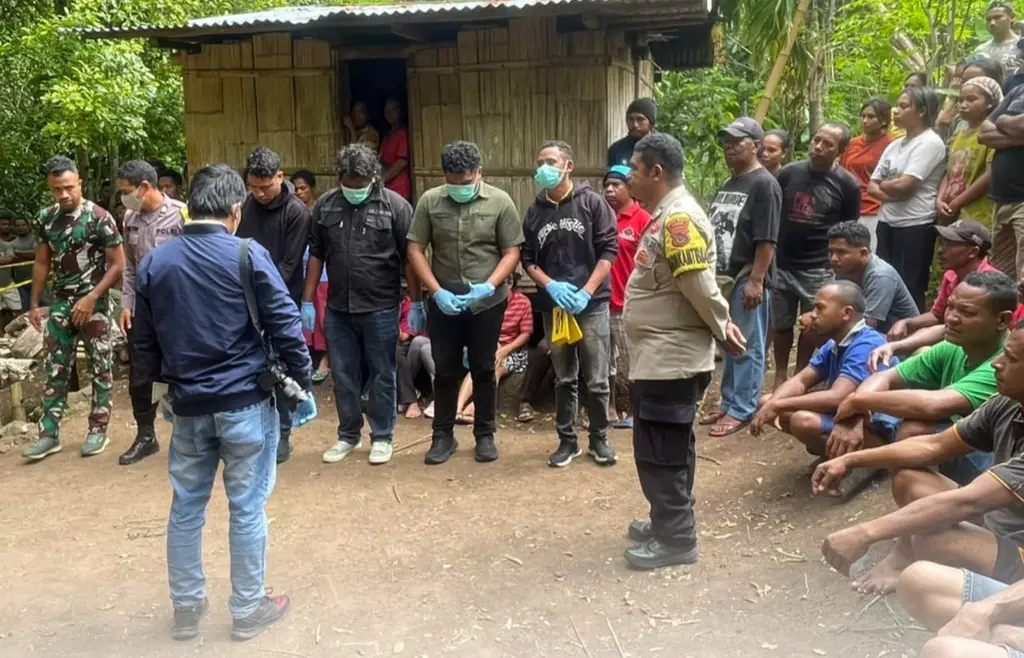
The victim, a fourth-grade student identified by the initials YBS, was found dead near a hut where he lived with his grandmother in Ngada Regency on January 29, 2026. Local police investigations, as reported by the media, indicate that the 10-year-old boy allegedly took his own life after his family was unable to buy him notebooks and pens costing less than Rp10,000 (under one US dollar).
“This is a heartbreaking humanitarian tragedy and a harsh slap in the face for a state that has failed to protect human rights,” said Usman Hamid, Executive Director of Amnesty International Indonesia.
“What happened in NTT is the product of structural poverty. We extend our deepest condolences to the family of the deceased.”
He stressed the irony of national budget priorities, noting that while a child allegedly ended his life over the inability to afford basic school supplies, the state is allocating trillions of rupiah to other programs.
“When a child responds to extreme poverty by taking his own life because his family cannot afford notebooks and pens, the state plans to spend Rp17 trillion on Board of Peace membership fees, Rp350 trillion on the Free Nutritious Meals program, and Rp400 trillion on the Merah Putih Cooperative,” he said.
According to Amnesty International Indonesia, the government must urgently evaluate its policy programs and ensure concrete measures to address poverty. Poverty, the organization emphasized, makes children highly vulnerable to human rights violations.
“The death of YBS shows that the state has failed to guarantee access to education for children from poor families,” Hamid said. “The right to education does not only mean school fees—it also includes access to learning materials. When this fails, it can severely affect a child’s psychological well-being, especially under conditions of extreme poverty.”
Amnesty International Indonesia further highlighted that poverty strips people of dignity, marginalizes them, and leaves them feeling powerless—conditions that limit participation in social, political, and cultural life, including the enjoyment of the right to education.
“Poverty silences people. Reflecting on this devastating incident, we urge a total evaluation of poverty eradication programs and the implementation of genuinely free education so that cases like YBS do not happen again,” Hamid said. “The state must involve affected communities and listen to their voices.”
The organization reiterated that quality education is a right guaranteed by the Indonesian Constitution and the International Covenant on Economic, Social and Cultural Rights (ICESCR). The state, it said, has an obligation not only to build schools, but also to ensure that every child has access to essential educational tools without financial barriers.
“The state must not only appear in grand narratives of trillion-rupiah budgets for major programs, while being absent when a child is allegedly driven to end his life because he lacks a book and a pen,” Hamid added.
“Social justice in this country will never stand as long as access to education remains a luxury for the poor and continues to be neglected by the state.”
Previously, police in Ngada Regency reported that YBS allegedly left a handwritten farewell letter in the Ngada language addressed to his mother, identified as MGT, asking her to let him go and not to cry, search for, or miss him. Authorities have questioned several witnesses and are continuing to investigate the case.
According to the Naruwolo Village head, on the night before the incident, YBS asked his mother for money to buy notebooks and pens. She was unable to fulfill the request due to the family’s dire economic condition.
YBS came from a poor household. His mother, a widow with five children, works as a farmer and occasional laborer. To help ease the family’s burden, YBS lived with his grandmother in a small hut near their village.(Uki)














Tinggalkan Balasan