

Indonesia in 2025: Amnesty Warns of State Repression, Inequality, and Ecological Disaster
JAKARTA, RAKYAT NEWS — Amnesty International Indonesia has declared 2025 a “national human rights disaster,” warning that the country has experienced its most severe erosion of human rights since the Reformasi era.
In its year-end report released on Monday, the organization said Indonesia has moved sharply backward on human rights due to government policies that prioritize economic growth—often driven by deforestation—over human dignity, environmental protection, and meaningful public participation. The consequences, Amnesty said, include widespread state violence, shrinking civic space, deepening social inequality, and a devastating ecological crisis.
According to Amnesty, 2025 was marked by systematic repression of civil and political rights. Large-scale protests against revisions to the TNI Law, labor policies, National Strategic Projects (PSN), and parliamentary benefits were met with mass arrests, excessive force, and criminalization rather than dialogue.
Amnesty recorded 5,538 people arbitrarily arrested, assaulted, or exposed to tear gas simply for participating in demonstrations. The group also documented the use of tear gas grenades containing explosive materials during protests in August, raising concerns about permanent injuries. Instead of accountability, police regulations were loosened to allow broader use of firearms.
“The government and parliament showed authoritarian tendencies by pushing through controversial laws without meaningful public participation,” said Usman Hamid, Executive Director of Amnesty International Indonesia.
He warned that the newly passed Criminal Procedure Code (KUHAP) could further legitimize abuses of power by law enforcement if left uncorrected.
Repression extended beyond street protests. Amnesty reported 283 attacks against human rights defenders in 2025, including journalists, environmental activists, and Indigenous leaders. Journalists accounted for 106 cases, while 74 involved Indigenous community members.
Notable incidents included violent attacks on Indigenous communities in Simalungun, arrests of environmental activists from Walhi and Kamisan, and the detention of an Indigenous leader in West Kalimantan after criticizing deforestation. Authorities also banned discussions of a critical book, Reset Indonesia, and intimidation escalated into acts of terror.
“These are systematic efforts to silence those defending the environment and Indigenous land rights,” Usman said, accusing the state of covering up its failure to manage natural resources justly.
Amnesty also criticized the expanding role of the military beyond defense, following revisions to the TNI Law that allow involvement in agriculture, national projects, social programs, and civilian posts. The organization warned that blurred civilian-military boundaries risk reviving patterns of repression.
Additionally, Amnesty condemned the government’s decision to name former president Suharto a national hero and to rewrite national history, arguing that it denies responsibility for past gross human rights violations, including the 1965 tragedy and later abuses.
Human rights setbacks also affected LGBTQIA+ groups. Police carried out discriminatory raids in Jakarta and West Java, arresting more than 100 people in what authorities labeled “sex parties.” Amnesty reported forced HIV tests, unlawful seizures of personal belongings, and the unauthorized dissemination of detainees’ photos.
The report highlighted worsening economic inequality. Citing data from CELIOS, Amnesty noted that the wealth of Indonesia’s 50 richest individuals equals that of 50 million citizens. Meanwhile, job insecurity intensified, with 79,000 layoffs recorded by September 2025.
A flagship school meal program, promoted as a solution to nutrition and health issues, turned into a public health crisis. More than 11,000 children were reported to have suffered food poisoning, with civil society groups estimating even higher numbers. Amnesty criticized the program as rushed, poorly supervised, and lacking adequate research.
National Strategic Projects continued to displace Indigenous communities, particularly in eastern Indonesia. Large-scale agricultural, mining, and infrastructure projects in Papua and Halmahera were accused of destroying forests, seizing customary land, and excluding affected communities from decision-making.
Ecological Disaster in Sumatra
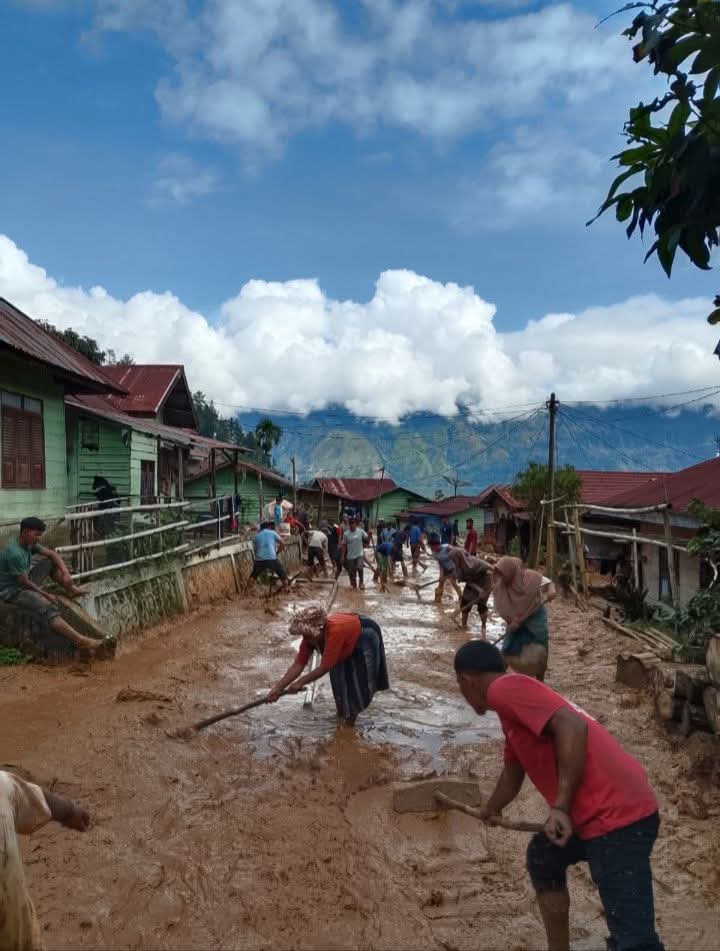
The year ended with a massive ecological catastrophe in Sumatra, where floods and landslides—linked to extensive deforestation—killed more than 1,000 people, injured thousands, destroyed nearly 147,000 homes, and displaced almost half a million residents.
Environmental groups reported that 1.4 million hectares of forest in Aceh, North Sumatra, and West Sumatra have been lost since 2016 due to corporate activity. Amnesty argued the disaster was not natural but the result of pro-deforestation economic policies and ignored early warnings.
“The state failed to act swiftly, refused international humanitarian aid, restricted media coverage, and even downplayed the crisis,” Usman said, calling the response slow, arrogant, and lacking empathy. Reports also emerged of security forces intimidating journalists and assaulting civilians delivering aid.
Amnesty warned that similar disasters could recur in 2026 if Indonesia continues prioritizing extractive economic growth enforced through authoritarian practices.
“Human rights violations, ecological destruction, and social injustice are deeply connected,” Usman concluded. “If deforestation-based economic policies persist, Indonesia risks repeating this human rights catastrophe on an even larger scale.”.(Uki)
























Tinggalkan Balasan