



Over 1,000 Dead, Aid Still Blocked: Amnesty Warns of Human Rights Risks in Sumatra Disaster
JAKARTA, RAKYAT NEWS — Amnesty International Indonesia has sharply criticized the Indonesian government’s disaster response after white flags were raised across parts of Aceh, symbolizing desperation among communities affected by devastating floods and landslides in Sumatra.
Responding to the phenomenon, Amnesty International Indonesia Executive Director Usman Hamid said the white flags — seen in Aceh Tamiang, Bireuen, North Aceh, Pidie Jaya, and Banda Aceh — represent “the voice of the people” trapped by mud, hunger, and isolation.
“For thousands of residents surrounded by floodwaters and facing food shortages, these white flags are an expression of disappointment over the state’s failure to act swiftly and decisively,” Hamid said in a statement on Friday.
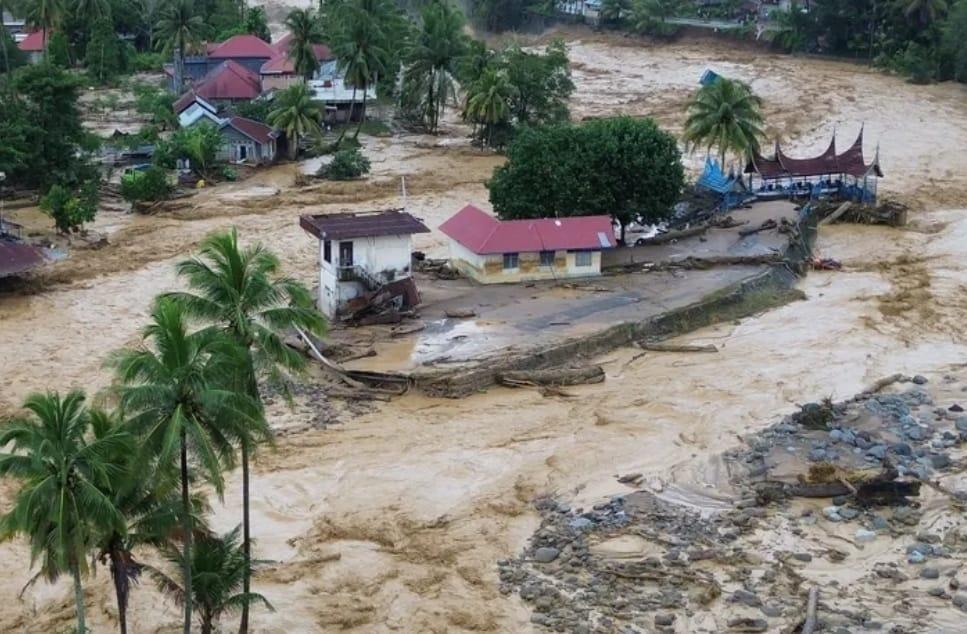
The ecological disaster has struck Aceh, North Sumatra, and West Sumatra for more than three weeks, undermining repeated claims by the central government that the situation remains “under control.” According to Amnesty, the continued refusal to declare a National Disaster and the rejection of international assistance raise serious human rights concerns.
“With more than a thousand people dead, hundreds of thousands displaced, and critical infrastructure paralyzed, arguments about ‘self-reliance’ are no longer relevant,” Hamid said. He criticized remarks by President Prabowo Subianto and senior officials who have rejected foreign aid and framed outside assistance as interference by parties “unfriendly to Indonesia’s strength.”
“State self-reliance cannot be used to justify allowing citizens to suffer,” Hamid stressed, pointing to Indonesia’s obligations under the International Covenant on Civil and Political Rights (ICCPR) to protect the right to life, and the International Covenant on Economic, Social and Cultural Rights (ICESCR) to ensure adequate standards of living, including access to food and healthcare.
Amnesty warned that when national capacity is clearly insufficient — as shown by the failure to deliver logistics to isolated areas for weeks — refusing international assistance is no longer a matter of sovereignty, but a potential violation of human rights.
“Blocking access to life-saving aid for those in desperate need constitutes state negligence,” Hamid said.
The organization also urged the government not to repeat what it described as a “dark chapter” in history, referring to Myanmar’s military junta during Cyclone Nargis in 2008, when foreign aid was blocked on sovereignty grounds, resulting in tens of thousands of preventable deaths.
“Indonesia must not allow such a tragedy to happen again. When aid is delayed, closing the door to helping hands is inhumane,” Hamid said.
Amnesty further called on the government to ensure that assistance is distributed fairly and effectively, and that displaced communities immediately receive adequate shelter, food, clean water, and essential health services.
“The demand for the government to declare a National Disaster and open the door to international assistance is an urgent humanitarian call,” Hamid concluded. “The white flags in Aceh are an ultimatum from the people. The government must mobilize all available resources — domestic and global — to save lives.”
Growing Desperation on the Ground
Media reports over the past several days have documented residents in flood- and landslide-hit areas of Aceh raising white flags as a plea for help. Aceh Governor Muzakir Manaf described the gesture as an act of solidarity and a call for attention from both domestic and international communities.
Affected residents, however, told the media they are exhausted and desperate, saying disaster response efforts in Sumatra — particularly in Aceh — have been slow and insufficient. Nearly three weeks after the floods began, many say aid has yet to meet basic needs.
Despite this, the central government has continued to insist that Indonesia does not require international assistance. During a cabinet meeting on 15 December, President Prabowo Subianto said the floods and landslides in Sumatra would not be declared a national disaster, arguing that the situation remained manageable. He also confirmed the government’s rejection of aid offers from foreign countries.
At the regional level, Medan Mayor Rico Waas returned 30 tons of rice donated by the United Arab Emirates, citing the central government’s policy of not accepting foreign assistance.
According to the National Disaster Management Agency (BNPB), as of 19 December 2025 the disasters in Aceh, North Sumatra, and West Sumatra have killed at least 1,072 people, injured around 7,000, left 186 missing, damaged more than 147,000 homes, and displaced over 111,000 residents.(Uki)



























Tinggalkan Balasan Batalkan balasan